In this latest series of articles, we publish interviews with women working as professionals or students in the technology sector. The objective is to highlight their work and contribution to the industry and the community.
In these interviews, you will find women working in technology to solve real-world problems, break stereotypes, and create the next big impact on the tech industry. This series of interviews shows that even with the lowest rate of women’s participation in the labor market in Pakistan, there are still many smart women who are creating and using technology to work wonders.
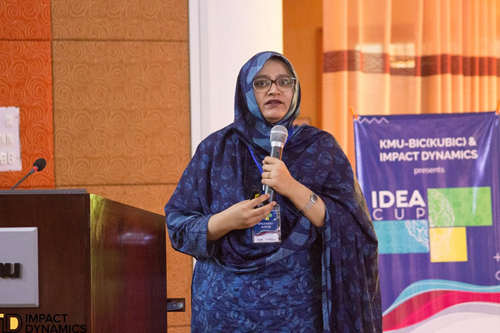
Today, we are featuring Qandil Tariq. Read on to learn more about her work and get inspired.
1. Tell us a little about yourself, your background, your education, and your work.
My name is Qandil Tariq, and I am a Senior Mobile Engineer with over 13 years of experience in mobile app development. I began my career in Pakistan at a time when both the platform and the presence of women in the field were still new. Entering this male-dominated space as one of the early women in Android development was both challenging and defining, and it shaped my belief that women can thrive and lead in technology.
Over the years, I have delivered apps for global clients across finance, healthcare, and enterprise, leading teams and mentoring junior developers. Recently, I completed my MSc in Big Data Technologies from Glasgow Caledonian University, expanding my expertise into AI, cloud, and data. This complemented my Android roots and opened opportunities to explore mobile solutions powered by emerging technologies.
Balancing work, study, and motherhood has tested my resilience but also deepened my commitment to creating opportunities for others. Today, my work spans Kotlin, Java, Jetpack Compose, app migrations, and AI-powered mobile applications, with a focus on using technology to make an inclusive impact.
2. What are your future plans/aspirations? How will it impact the community/society/your team/your project?
Looking ahead, I want to contribute at the intersection of AI, mobile technology, and applied research. My vision is to build AI-driven mobile applications that address real-world challenges in health, education, and financial inclusion, areas where technology can change lives most meaningfully.
I am particularly drawn to on-device AI and privacy-preserving models that empower people while protecting their data. From AI-powered resume analyzers to OCR-based accessibility tools and health monitoring apps, I see immense potential for inclusive, impactful solutions.
Beyond development, I plan to pursue a PhD in my field to deepen my expertise and strengthen the bridge between research and practical application. Alongside this, I aspire to publish research, contribute to open-source projects, and mentor young developers, especially women. Through blogs and talks, I aim to inspire others to see themselves not only as coders but also as innovators and thought leaders.
Ultimately, my goal is to ensure that cutting-edge research does not remain confined to journals but is transformed into mobile solutions that reach people where they are and improve everyday lives.
3. Please brag about your career accomplishments. What are the things you are proud of?
Over my 13+ years in mobile development, I’ve had the privilege of leading teams and delivering Android solutions that reached thousands of users worldwide. I’m proud of contributing to apps that became household names in Pakistan’s tech ecosystem, including Savaree, one of the country’s earliest ride-hailing apps (later acquired by Careem), and PakWheels, the largest automotive platform connecting millions of buyers, sellers, and enthusiasts. These projects not only sharpened my technical skills but also allowed me to help shape products that transformed industries.
A deeply personal milestone was completing my MSc in Big Data Technologies at Glasgow Caledonian University after more than a decade-long study gap, balancing academic rigor with professional work and motherhood. It proved my resilience and commitment to growth.
I am also proud of being among the early female Android developers in Pakistan, breaking into a male-dominated space and building a career on persistence and results. Today, I continue this journey through mentoring, blogs, LinkedIn live sessions, and YouTube tutorials, making Android and AI accessible to wider audiences.
4. What has been your best education/career decision, and why?
The most defining decision of my career was returning to higher education after more than a decade to complete my MSc in Big Data Technologies at Glasgow Caledonian University. It was not an easy path, balancing motherhood, a demanding career, and academic rigor, but it became a turning point that reshaped my professional journey.
This step expanded my expertise beyond Android into AI, cloud computing, and data-driven systems, allowing me to connect mobile development with cutting-edge research. More importantly, it reignited my passion for continuous learning and gave me the confidence to embrace new challenges, no matter the stage of life.
What makes this decision most rewarding is the ripple effect: it not only strengthened me as a technologist but also positioned me as a mentor and advocate. I can now show other women, especially those who step away from education or careers due to family or societal pressures, that persistence and lifelong learning can open new doors at any time.
5. What are the best lessons you’ve learned?
One of the most valuable lessons I’ve learned is the power of sharing knowledge. Early in my career, I focused on building my own expertise, but I soon realized that knowledge multiplies when it is passed on. Teaching, mentoring, and writing not only help others grow but also deepen my own understanding.
I’ve also learned that persistence and resilience matter as much as technical skill. Technology can feel overwhelming, but consistent effort and adaptability always lead to breakthroughs. Equally important is the courage to take risks, even small ones that push you outside your comfort zone, because they often open the door to meaningful growth.
Another lesson is the importance of boundaries. At work, I give full focus to solving problems and leading projects; with family, I aim to be fully present. Maintaining this separation has helped me sustain energy, avoid burnout, and truly appreciate both spaces.
Finally, I’ve learned that community matters. Individual resilience can carry you far, but surrounding yourself with people who uplift you, mentors, colleagues, or family, makes the journey more sustainable and fulfilling.
6. Which woman inspires you and why?
The woman who inspires me most is Bibi Khadija (RA), the first wife of the Prophet Muhammad (PBUH). She was a remarkable figure, a successful businesswoman at a time when women were rarely visible in commerce. Her strength, dignity, and foresight made her both a pioneer in trade and a pillar of support for one of the greatest missions in history. Her life teaches me that women can be nurturing and trailblazing, that faith and enterprise can coexist, and that true leadership is grounded in integrity. Whenever I struggle to balance career, education, and family, her example reminds me that women have always had the power to shape economies and societies.
I am also deeply inspired by Faiza Yousuf, co-founder of WomenInTechPK. As an introvert, I’ve often hesitated to put myself forward, but watching her consistency, authenticity, and commitment to building inclusive spaces has encouraged me to share my own work and step out of my comfort zone.
Both women, though from very different times, show me that leadership comes in many forms, grounded in values, driven by vision, and capable of inspiring others to grow.
7. Do you think Pakistan has changed as a society in terms of accepting career-oriented women? What needs to change to help more women come forward?
Yes, Pakistan has changed, especially in the last decade. We now see more women in classrooms, offices, startups, and even leading their own ventures. In urban centers, women are increasingly visible in technology, entrepreneurship, and leadership roles, and their presence is gradually shifting workplace cultures. This gives me hope, because visibility matters. When young girls see women in these positions, they begin to believe they can be there too.
But progress is uneven. Women outside major cities still face barriers that prevent them from fully participating in the economy. To bring more women forward, we need to create safe and supportive environments where they can thrive. That means equal pay, workplace policies for working mothers, mentorship opportunities, and investment in digital literacy and financial independence.
Most importantly, there must be a mindset shift at both the family and societal level — encouraging girls to pursue education and careers without guilt or fear. When women are trusted with opportunities, they not only transform their own lives but also uplift their families and communities.
8. What will be the biggest challenge for the generation of women behind you?
I believe the next generation of women will face a dual challenge. On one side, they must keep pace with the rapid evolution of technology, where new tools and frameworks constantly emerge. On the other hand, many will still be navigating societal expectations that define women’s worth primarily in domestic roles. Balancing these pressures, excelling in a fast-moving industry while carrying traditional responsibilities, will be one of their greatest tests.
Yet within this challenge lies opportunity. With the right mentorship, flexible environments, and societal support, women will not only overcome these barriers but also redefine what leadership and innovation look like in technology.
9. If you could change one thing about the tech industry/business, what would it be?
If I could change one thing, it would be the lack of inclusivity that still exists in tech. Opportunities, funding, and leadership roles remain concentrated in narrow circles, often excluding women, marginalized communities, and even underrepresented groups within men.
True change means more than just hiring women; it means mentoring, promoting, and trusting them with decision-making power. It requires embedding mentorship as a core practice, implementing family-friendly policies, and creating safe, respectful workplaces. An inclusive tech industry would not only be fairer but also more innovative, because diversity fuels creativity and better solutions.
10. How can WomenInTechPK help you and other women?
WomenInTechPK is already a powerful community, and its greatest strength is visibility and support. For women like me, it offers a platform to share stories, connect with peers, and learn from mentors. For those just starting out, it provides resources, guidance, and the reassurance that they are not alone in their journey.
By continuing to amplify diverse voices, create mentorship opportunities, and build bridges to global networks, WomenInTechPK can help women not only enter the tech world but thrive as leaders within it.
I am grateful to WomenInTechPK for creating a platform where stories like mine can be shared. I hope my journey shows other women that no matter the breaks, barriers, or doubts, it is always possible to restart, grow, and lead. My message is simple: trust yourself, keep learning, and never let circumstances define your limits.
You can follow Qandil Tariq using her profile(s) below, and please do not hesitate to hire her for your next project.
LinkedIn: https://www.linkedin.com/in/qandil-tariq-11a01737/
GitHub: https://github.com/Qandil11
Medium: https://medium.com/@qandil.tariq11